
Sterile Processing Technician Certificate
Program Type
- Professional Certificate
Format
- Online
Area of Study
Cost
$1,999
Average Completion Time
4 to 6 Months
When to Start
Anytime
About this program
The Sterile Processing Technician online course trains you for a vital behind-the-scenes role in patient care. You’ll learn how to clean, sterilize and manage surgical instruments and equipment in hospitals and clinics. This flexible program includes online coursework, support from industry experts and the opportunity for a volunteer externship to gain real-world experience. Designed for beginners, the online course prepares you for national certification and entry-level employment. You must be 18 years old with a high school diploma, GED or equivalent.
At a Glance
4 to 6 Months
Earn the Certificate
Online Course
Learn on Your Schedule
Start Now
Register Anytime
Sterile Processing Technician Online Certificate Course
Flexible Online Learning
Study on your own schedule with mobile-ready coursework designed to fit your life and responsibilities.
All Materials Included
Tuition covers all textbooks and learning resources.
24/7 Support
Access help whenever you need it with around-the-clock learner support.
National Certification Preparation
Get ready to sit for the Certified Registered Central Service Technician (CRCST) exam through the Healthcare Sterile Processing Association (HSPA).
Hands-on Experience
Gain real-world skills through an optional volunteer externship coordinated with a local healthcare facility.
Career-Focused Skills
Learn essential skills in hospital and surgical environments, including infection prevention practices, how to sterilize surgical tools and how to manage medical equipment.
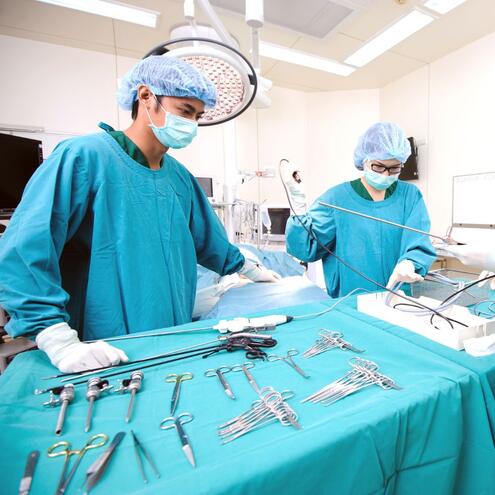
The Sterile Processing Technician online course is designed to prepare students to function as a sterile processing professional in multiple healthcare settings. Sterile Processing technicians perform and participate in decontamination, cleaning, assembling, packaging, scanning, sterilization, storage and distribution of reusable surgical instrumentation and equipment.
The purpose of this program is to prepare students to clearly and thoroughly understand his or her roles and responsibilities. Working in a sterile processing area requires specific knowledge and skills, including an understanding of the following key areas and topics:
- Instrumentation: Knowledge of surgical instruments and specialty devices
- Processing of Surgical Instrumentation: Decontamination, packaging and sterilization of surgical instrumentation
- Processing of Moveable Patient Equipment: Processing, cleaning, testing, assembly and distribution of movable patient care equipment
- Storage and Inventory: Storage, handling and distribution of sterile surgical instrumentation and devices, as well as inventory control and cost recovery systems
- Medical Terminology: Knowledge of medical terminology, anatomy and physiology and microbiology
- Prevention Processes: Infection prevention, decontamination and disinfection processes
Objectives
After completing this program, you will be able to:
- Describe various functions of SPD
- Identify the health and safety regulations, standards and guidelines that apply to the processing of medical devices and instrumentation
- Define anatomy and physiology, explain how they are related and understand how anatomy and physiology relate to the work performed in the sterile processing department
- Understand the basic factors in disease transmission
- Describe the body’s defenses against infection and the factors that affect the body’s susceptibility to disease
- Distinguish between regulated medical waste and non-infectious waste
- Explain bloodborne pathogens and the safety precautions necessary in SPD
- Outline the standards required for a quality decontamination process
- Understand the appropriate dress code and the role of personal protective equipment (PPE) as it relates to OSHA regulations and employee safety and health
- Describe functions performed during chemical disinfection
- Describe the procedures that must be followed and the precautions that must be observed during the preparation and use of the variety of disinfecting agents used in the decontamination process
- Identify the processes needed to effectively disassemble, clean, disinfect, inspect, reassemble, test, store and distribute movable patient care equipment
- Understand the organization of instruments sets and the preparation of basins and textile packs
- Mobile-Ready
- National Certification Opportunity
- All Textbooks and Materials
- 24/7 Learner Support
- Certificate of Completion
- Clinical Externship Opportunity
Cost: $1,999
Length: 4 to 6 Months (6 months access plus possible 3-month extension)
When to Start: Self-Paced, Start Any Time
Payment Plan
Health Ed Today offers 3-, 6- and 10-month payment plans.
Certification Opportunity
After completing the Sterile Processing Technician course, you’ll be eligible to take the Certified Registered Central Service Technician (CRCST) exam, offered by the Healthcare Sterile Processing Association (HSPA)—a leading organization in the field.
This nationally recognized certification is often required or strongly preferred by employers. It shows that you have the knowledge and skills needed to work in sterile processing roles across hospitals, outpatient centers and surgical clinics.
The program is designed to prepare you for success on the exam by covering key areas such as:
- Infection control and sterilization techniques
- Anatomy, physiology and microbiology
- Instrument handling and inventory management
- Safety procedures and regulations
While certification is not guaranteed, completing this course provides a solid foundation for passing the CRCST exam and starting your career with confidence.
You may choose to take part in an optional volunteer externship with a local organization in your field to gain hands-on experience. Externship sites may require additional documentation such as health records, immunizations, drug screening or background checks. After completing your program, you can contact the Health Ed Today Externship Coordinator at mentor@healthedtoday.com to arrange placement.
About the Sterile Processing Technician Profession
Sterile processing technicians play a critical role in patient safety by ensuring that surgical instruments and medical equipment are clean, sterile and ready for use. They work behind the scenes in hospitals, surgical centers and outpatient clinics, supporting surgical teams and other healthcare professionals.
What Do Sterile Processing Technicians Do?
- Clean and sterilize surgical instruments and tools
- Assemble and package equipment for procedures
- Monitor inventory and manage sterile storage areas
- Follow strict infection prevention and safety protocols
- Support patient care by maintaining a safe surgical environment
Where Do They Work?
- Hospitals
- Outpatient surgery centers
- Clinics and medical offices
- Laboratories and specialty facilities
Skills That Matter
Success in this role requires attention to detail, good communication, strong organizational skills and a commitment to safety and cleanliness. Technicians must understand anatomy, infection control and sterilization standards.
How to Register
Registration is open and ongoing. Students can register at any time.
Create an SFSU ID and follow the email instructions to obtain an SFSU Password.
SFSU's College of Professional & Global Education offers this course in partnership with Health Ed Today. Visit the Health Ed Today pre-registration page to enroll.
Contact
Information and Enrollment
To learn more and to enroll visit Health Ed Today or call (877) 261-1484.
General Inquiries
Contact health programs at cpagehealthceu@sfsu.edu.
Baseemah Rahman
Program Specialist
(415) 405-4226
Send Me Updates
Send me updates about the Sterile Processing Technician Certificate Program.